
Let me ask you something.
Have you ever sat across from someone new, someone who looks nothing like the last partner, and noticed a feeling you recognize settling into your chest? Not the exciting kind of recognition. The other kind. The one that says: I have been here before.
Maybe it is the tightening in your chest when things start to feel real. The moment you begin looking for what is wrong with this person, even though nothing is wrong. The pull to create a little distance, just enough to feel safe again. Or the opposite: the way you lean in harder the more unavailable they become, mistaking that chase for connection.
Different person. Different story. Same essential dynamic.
Repeating relationship patterns are not a character flaw. They are the nervous system faithfully running an instruction that was written before you were old enough to have a say in it.
Epigenetics has shown us something far more specific than the idea that childhood shapes us. The emotional experiences of our ancestors alter gene expression in measurable, particular ways. And those alterations pass down through generations, not as vague tendencies, but as specific changes to how the body reads the world.
One of the most striking examples of this involves oxytocin, the neurochemical most closely associated with bonding, trust and connection. Researchers have found that DNA methylation of the oxytocin receptor gene, the mechanism that governs how receptive we are to closeness, is directly shaped by early adverse experience.
Ein-Dor and colleagues found that elevated DNA methylation at the oxytocin receptor promoter region in young adults was selectively related to attachment avoidance. The more this gene was switched off by early experience, the more a person pushed connection away, even when they consciously wanted it.
Ein-Dor T et al. (2026). Epigenetic signatures of attachment insecurity and childhood adversity. Cited in: Szcygiel M et al. Epigenetic Echoes: Bridging Nature, Nurture, and Healing Across Generations. Frontiers in Psychiatry, 2026. doi: 10.3389/fpsyt.2026.1769422
This is not ambivalence. It is not you being difficult. It is your oxytocin system, shaped by experiences that may not even be yours, telling you that love carries a cost that it needs to protect you from.
My TEDx talk on inherited emotional DNA explores how this transmission works across generations and why it is so resistant to approaches that only work at the level of the mind.
Here is the thing most relationship guidance will not say directly, because it is genuinely uncomfortable to hear.
The nervous system learned what love feels like from the very first environment it ever knew. If that environment was warm and consistent, connection as an adult tends to feel natural. Safe. Easy to inhabit.
But if the environment was unpredictable, if love arrived inconsistently, if closeness sometimes brought pain, if emotional availability was the exception rather than the rule, then the nervous system encoded that experience as the template.
And templates do not care about what you consciously want.
This is why a genuinely available person can feel oddly flat. Why someone who shows up consistently, who texts back, who does not run hot and cold, who is simply there, can feel somehow underwhelming. Not because they are wrong. Because they do not register the familiar signal that the nervous system learned to call love.
For someone encoded in early life for emotional uncertainty, healthy love can feel nearly invisible at first. Not because it is not right. Because it does not feel like the danger the nervous system learned to call home.
You can understand all of this and still feel the pull. Because the pull does not live in your understanding. It lives in your cells.
The same dynamic plays out in how we relate to our own decisions, our own authority, our own knowing. If this resonates, How to Trust Your Intuition and Make Decisions That Actually Feel Like You explores the cellular roots of that override in depth.

I want to share something with you because I lived both sides of this.
For four years I stayed in a friendship that I knew, somewhere I could not quite name, was costing me more than it was giving. Not because it was unkind. Because I had become the architecture of it. The one who called. The one who held it together. The one whose needs somehow never quite made it onto the agenda.
I told myself this was what loyalty looked like.
The truth was harder. I had an inherited instruction that said my value in a relationship was measured by how much I was willing to carry. That needing something in return made me a burden. That leaving, even when leaving was the honest thing, meant I had failed.
Think of the repeating relationship pattern that has shown up most consistently across different people and different contexts.
The closing down when things get close. The giving until there is nothing left. Waiting for it to inevitably go wrong. The choosing of the person who needs you over the person who sees you.
Now sit with these questions. Not in your head. In your body.
Where in you does this pattern live? What does it feel like physically?
Did someone before you carry this same instruction about love?
What would it mean to you, in your body, to no longer need it?
You do not need to solve it. Feeling it clearly is the beginning. Knowing it was never yours to carry is where the clearing starts.
The same encoded instructions that shape our relationship patterns shape our relationship with money, with success, with what we believe we are allowed to receive. The piece on inherited money blocks shows how strikingly similar the cellular mechanism is across every area of life.

That stirring is not a coincidence. It is recognition. And recognition is how clearing begins.
The Abundance Code is where this work goes deeper. Live clearings with me, private healing sessions and on-demand activations, all working at the cellular level where these inherited instructions actually live.
The pattern in your relationships is not a verdict on you.
It is not evidence of damage or poor judgment or some fundamental inability to love or be loved.
It is an instruction. Written in conditions that are no longer yours. Running in a body that has outgrown the original threat.
With so much love,
Lisa
It is not about who you are choosing. It is about what feels familiar at the cellular level. The nervous system learns what love feels like from the earliest environment it knew, and then orients toward that signature for decades. Consistent, available connection can feel flat to someone encoded for uncertainty, while the anxiety of a push-pull dynamic reads as chemistry.
Yes. Epigenetic changes associated with trauma are not fixed. Szcygiel et al. (Frontiers in Psychiatry, 2026) synthesizing three decades of research confirmed that consistent new experience at the body level is one of the primary mechanisms through which these patterns update. Insight alone does not reach the level where the pattern lives. Working at the nervous system level is what creates lasting change.
Most commonly: inherited emotional encoding passed through family lines, early attachment experiences that calibrated the nervous system toward particular relational dynamics, and epigenetic changes that altered gene expression in regions governing fear, reward and social connection. These are not character flaws. They are survival instructions written under real conditions, often generations ago, that the body is still faithfully running.
Additional Reading
If this resonated, explore more of my work here:
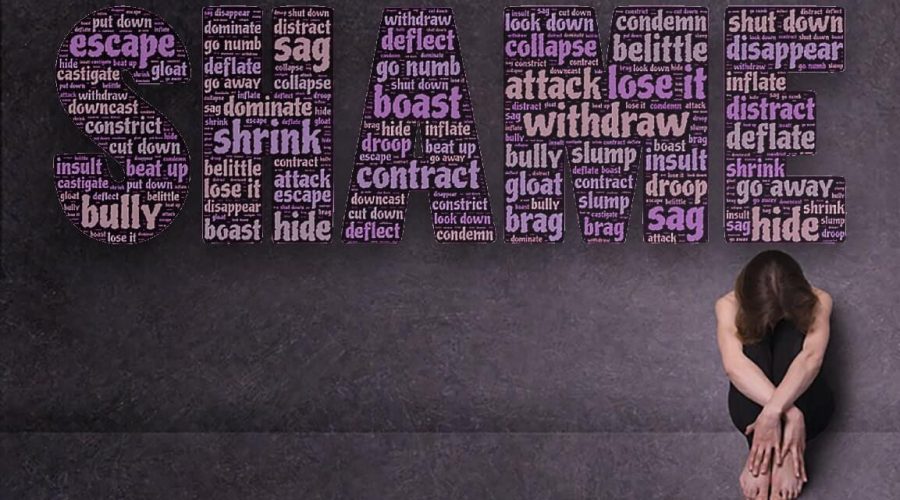
What, you ask, is inherited shame? What if I told you many emotions are inherited, that they are passed down in our lineage from generation to generation? Our ancestors didn’t

Where in life would you like to be feeling more joy or happiness? Everyone has a divine right to experience more joy and happiness on a daily basis. I’m not

Are You Sabotaging Your Joy? Where in life would you like to be feeling more joy or happiness? Everyone has a divine right to experience more joy and happiness on

Are You Living in the Past? Do you spend too much time living in the glorious memories of the past? What about those unpleasant thoughts of the past, do they

Food Heals Nation Podcast Featuring Lisa Thomas PGNlbnRlcj48aWZyYW1lIHN0eWxlPSJib3JkZXI6IG5vbmUiIHNyYz0iLy9odG1sNS1wbGF5ZXIubGlic3luLmNvbS9lbWJlZC9lcGlzb2RlL2lkLzY5MjM0MDYvaGVpZ2h0LzM2MC93aWR0aC82NDAvdGhlbWUvbGVnYWN5L2F1dG9uZXh0L25vL3RodW1ibmFpbC95ZXMvYXV0b3BsYXkvbm8vcHJlbG9hZC9uby9ub19hZGR0aGlzL25vL2RpcmVjdGlvbi9iYWNrd2FyZC8iIGhlaWdodD0iMzYwIiB3aWR0aD0iNjQwIiBzY3JvbGxpbmc9Im5vIiAgYWxsb3dmdWxsc2NyZWVuIHdlYmtpdGFsbG93ZnVsbHNjcmVlbiBtb3phbGxvd2Z1bGxzY3JlZW4gb2FsbG93ZnVsbHNjcmVlbiBtc2FsbG93ZnVsbHNjcmVlbj48L2lmcmFtZT48L2NlbnRlcj4= I’m so excited to be a guest on today’s Food Heals Nation podcast! Ever feel like any work you do on your
https://lisathomasglobal.com/wp-content/uploads/2019/02/Ways-To-Attract-More-Money.png 5 Ways To Attract More Money It can sometimes feel like only ‘other people’ have it easy, or money flows to them without much effort. Believe it or not
"*" indicates required fields
If you’re feeling called to step beyond inherited limitations and into your full potential, I’d love to welcome you into my private Facebook community.
And as we all know, sometimes things feel overwhelming…
Join the group and, as my gift to you, receive a guided healing activation to ease the pressure and restore clarity.
To get started, simply enter your first name and email below. You’ll receive instant access and be redirected straight to the community.
"*" indicates required fields